It's no secret technology has evolved a lot in the past decades, but it's kind of amazing to look back and see this...
... has now turned almost completely, for the most part (and more - in some senses) into this:
Showing posts with label Technology. Show all posts
Friday, April 2, 2010
Tuesday, January 27, 2009
7 Worst Technological Predictions of All Times
In a highly technological world as the one we live in, it's hard to remember that - not that long ago - some "enlighted" visionaires predicted a few things that... well... you better read it yourself.
#1
"I think there is a world market for maybe five computers."
Thomas Watson, president of IBM, 1943
Sure, he was talking about computers that took an entire (large) room to install... how could he predict we would be carrying around more computer power with us today (in our cellphones, wristwatches, etc) than they had back then?
#2
"Television won't be able to hold on to any market it captures after the first six months. People will soon get tired of staring at a plywood box every night."
Darryl Zanuck, executive at 20th Century Fox, 1946
... couldn't agree more!
#3
"Nuclear-powered vacuum cleaners will probably be a reality within 10 years."
Alex Lewyt, president of vacuum manufacturer Lewyt Corp., 1955
Not only he was wrong, as we unfortunately would now need super-duper vacuum cleaners to clean messy situations like chernobyl... :/
#4
"There is no reason anyone would want a computer in their home."
Ken Olsen, founder of Digital Equipment Corp., 1977
Certainly not!
#5
"Almost all of the many predictions now being made about 1996 hinge on the Internet's continuing exponential growth. But I predict the Internet will soon go spectacularly supernova and in 1996 catastrophically collapse."
Robert Metcalfe, founder of 3Com, 1995
The Internet did - in fact - go Supernova... so, he was only "half wrong", about the all "collapse" thing...
This case was more interesting because he promised to eat his words if his prediction turned out to be wrong.
... and contrary to what you might believe... he really kept is promise and ate a printed copy if his words at his keynote speech at the International World Wide Web Conference in 1999.
(If all politicians were like that, I'm sure we'd live in a much better world.)
#6
"Apple is already dead."
Nathan Myhrvold, former Microsoft chief technology officer, 1997
... will someone let him know they seem to have came back to life?.. oh.. I'm sure they've noticed it by now.
#7
"Two years from now, spam will be solved."
Bill Gates, founder of Microsoft, 2004
... yes, right along viruses and Blue Screens of Death...
(hmmm... I wonder why he didn't promise to eat his words like the other guy?)
via [MSN]
... Just keep in mind that, just as you're laughing from these predictions right now, you might be hearing (and believing) something similar someone is saying today. So... be sure to always keep an healthy dose of skepticism... no mather what anyone tells you.
#1
"I think there is a world market for maybe five computers."
Thomas Watson, president of IBM, 1943
Sure, he was talking about computers that took an entire (large) room to install... how could he predict we would be carrying around more computer power with us today (in our cellphones, wristwatches, etc) than they had back then?
#2
"Television won't be able to hold on to any market it captures after the first six months. People will soon get tired of staring at a plywood box every night."
Darryl Zanuck, executive at 20th Century Fox, 1946
... couldn't agree more!
#3
"Nuclear-powered vacuum cleaners will probably be a reality within 10 years."
Alex Lewyt, president of vacuum manufacturer Lewyt Corp., 1955
Not only he was wrong, as we unfortunately would now need super-duper vacuum cleaners to clean messy situations like chernobyl... :/
#4
"There is no reason anyone would want a computer in their home."
Ken Olsen, founder of Digital Equipment Corp., 1977
Certainly not!
#5
"Almost all of the many predictions now being made about 1996 hinge on the Internet's continuing exponential growth. But I predict the Internet will soon go spectacularly supernova and in 1996 catastrophically collapse."
Robert Metcalfe, founder of 3Com, 1995
The Internet did - in fact - go Supernova... so, he was only "half wrong", about the all "collapse" thing...
This case was more interesting because he promised to eat his words if his prediction turned out to be wrong.
... and contrary to what you might believe... he really kept is promise and ate a printed copy if his words at his keynote speech at the International World Wide Web Conference in 1999.
(If all politicians were like that, I'm sure we'd live in a much better world.)
#6
"Apple is already dead."
Nathan Myhrvold, former Microsoft chief technology officer, 1997
... will someone let him know they seem to have came back to life?.. oh.. I'm sure they've noticed it by now.
#7
"Two years from now, spam will be solved."
Bill Gates, founder of Microsoft, 2004
... yes, right along viruses and Blue Screens of Death...
(hmmm... I wonder why he didn't promise to eat his words like the other guy?)
via [MSN]
... Just keep in mind that, just as you're laughing from these predictions right now, you might be hearing (and believing) something similar someone is saying today. So... be sure to always keep an healthy dose of skepticism... no mather what anyone tells you.
Sunday, September 7, 2008
Portugal Technological Achievements
What prompted me to write this entry was reading news around the web and people talking about some recent "amazing technological stuff" that happen to be common place here in Portugal and have been for a very long time.
ATM machines
For instance, take ATM machines (in here called Multibanco.)
Having been used to the Multibanco (MB) machines since my early years, I was shocked when I started traveling to different (and supposedly more "advanced") countries and saw that they had a bunch of different ATM machines, completely old-looking with monochrome screens and often incompatible with my cards.
In Portugal, every card from every bank works in any MB machine. They have large and simple to operate color screens - even capable of playing video ads - and with voice prompts if you want it (useful for impaired vision users.) Also, international cards will automatically trigger the MB machine to display its options in their respective language.
MB is also not just for cash deposits and withdrawls - you have countless operations you can perform: buying tickets for music shows, tickets for train travels, charging up your prepaid cell phone cards, and just about anything you might imagine.
Although some of these are fairly recent, MB has been around since 1985 and is now available everywhere. Just about every place where you might be asked to pay for something has a MB terminal for payments - and you can easily find a cash dispenser MB just about anywhere.
There's really no need to carry around large quantities of cash in Portugal, as you can live by with your MB card.
Needless to say, these machines are fully compatible with all major internationl credit/debit cards (though some stores accept just MB transactions and choose not to accept credit cards.)
There's also MB.net, a service that allows you to create virtual credit cards for single operations on the internet. You set the cash and date limit and it creates a unique card number for you to use in a single (or more) operation.
To finish this MB thing, you can also access all of MB functions from your cellphone - meaning you can actually pay for your cell phone using your cell phone (sounds kind of cool, doesn't it? :)
Cell Phones
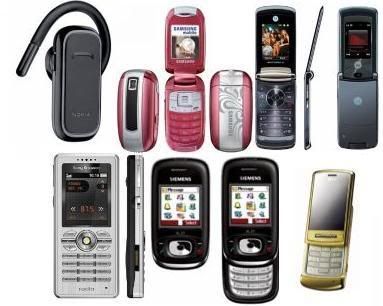
Talking about cell phones...Portugal is a cellphone heaven (or should I say, hell?)
Everyone has a cellphone... or two... or three. In fact, you're now more likely to find someone having a cellphone than having a fixed line phone.
Even mobile operators offer "fixed" mobile phones for home use (basically a cell phone with a docking station - but restricted to work in a single cell so you can't move it around.)
Any kid going to school is likely to have one, and wherever you go you'll find people happily (and sometimes annoyingly - I admit) texting and chatting on the cellphone.
Why? That's easy... we were the first to introduce prepaid cellphone SIM cards.
Until then, cell phones were quite expensive - both to acquire and to maintain - with hefty monthly fees.
When the prepaid cell phones appeared, people felt they had all the control they needed to finally start using cell phones without worrying about the bill they would get at the end of the month.
The principle is simple and effective: you "fill" your card with a specified amount - let's say, 10 euros. And you start using your cell phone as you wish. At any moment you can easily check how much money you have remaining on your card, and at any moment you can easily fill it up again at any MB machine, over the internet, or even using the cell phone (as I said before.)
There are also ways to transfer money from one cell to another (for example, from a parent's phone to their children) and also ways to request someone to call you back even if you're out of money on your card.
For infrequent callers there are even "no obligation" plans where you're not even required to "fill up" your card. Meaning you can just fill it with $5 and keep it working for the rest of your life (provided you make a phone call once every 6 months or so.)
RFID tickets

In Porto, since 2002, you can use a single RFID ticket called the "Andante" (literally meaning: walker) whether you're taking a train, bus or subway. It was the first fully contactless mass transit ticketing system used in the world.
Electronic Toll collection systems

I can't help but chuckle everytime I hear/read about some country implementing non-stop electronic tolls.
We have our own Via Verde (literally: Green Way) since 1991 - yep, that's right: 17 years ago!
Since 1995 it has been implemented in *every* toll in the country and it allows you to simply drive by a special non-stopping lane to be charged without stopping. That operation will appear in your bank statement.
More recently, they have ditched the toll booths all together and use just an overhead structure - meaning you have just a free empty stretch of highway, and you don't even need to slow down like in the older "Via Verde" lanes. (If you want/need to pay the old-fashioned way you'll need to take a detour and head for the toll booths.)
Starting next year, every car in the country will be *required* to have a license plate ID chip that will be compatible with this system - meaning no one will have ever have to stop in toll booths again.
In other areas, I could talk about Cristiano Ronaldo, Figo, or even Port Wine and our yummy Francesinhas... but that's stuff for another post. :)
ATM machines
For instance, take ATM machines (in here called Multibanco.)
Having been used to the Multibanco (MB) machines since my early years, I was shocked when I started traveling to different (and supposedly more "advanced") countries and saw that they had a bunch of different ATM machines, completely old-looking with monochrome screens and often incompatible with my cards.In Portugal, every card from every bank works in any MB machine. They have large and simple to operate color screens - even capable of playing video ads - and with voice prompts if you want it (useful for impaired vision users.) Also, international cards will automatically trigger the MB machine to display its options in their respective language.
MB is also not just for cash deposits and withdrawls - you have countless operations you can perform: buying tickets for music shows, tickets for train travels, charging up your prepaid cell phone cards, and just about anything you might imagine.
Although some of these are fairly recent, MB has been around since 1985 and is now available everywhere. Just about every place where you might be asked to pay for something has a MB terminal for payments - and you can easily find a cash dispenser MB just about anywhere.There's really no need to carry around large quantities of cash in Portugal, as you can live by with your MB card.
Needless to say, these machines are fully compatible with all major internationl credit/debit cards (though some stores accept just MB transactions and choose not to accept credit cards.)
There's also MB.net, a service that allows you to create virtual credit cards for single operations on the internet. You set the cash and date limit and it creates a unique card number for you to use in a single (or more) operation.
To finish this MB thing, you can also access all of MB functions from your cellphone - meaning you can actually pay for your cell phone using your cell phone (sounds kind of cool, doesn't it? :)
Cell Phones
Talking about cell phones...Portugal is a cellphone heaven (or should I say, hell?)Everyone has a cellphone... or two... or three. In fact, you're now more likely to find someone having a cellphone than having a fixed line phone.
Even mobile operators offer "fixed" mobile phones for home use (basically a cell phone with a docking station - but restricted to work in a single cell so you can't move it around.)
Any kid going to school is likely to have one, and wherever you go you'll find people happily (and sometimes annoyingly - I admit) texting and chatting on the cellphone.
Why? That's easy... we were the first to introduce prepaid cellphone SIM cards.
Until then, cell phones were quite expensive - both to acquire and to maintain - with hefty monthly fees.
When the prepaid cell phones appeared, people felt they had all the control they needed to finally start using cell phones without worrying about the bill they would get at the end of the month.
The principle is simple and effective: you "fill" your card with a specified amount - let's say, 10 euros. And you start using your cell phone as you wish. At any moment you can easily check how much money you have remaining on your card, and at any moment you can easily fill it up again at any MB machine, over the internet, or even using the cell phone (as I said before.)
There are also ways to transfer money from one cell to another (for example, from a parent's phone to their children) and also ways to request someone to call you back even if you're out of money on your card.
For infrequent callers there are even "no obligation" plans where you're not even required to "fill up" your card. Meaning you can just fill it with $5 and keep it working for the rest of your life (provided you make a phone call once every 6 months or so.)
RFID tickets

In Porto, since 2002, you can use a single RFID ticket called the "Andante" (literally meaning: walker) whether you're taking a train, bus or subway. It was the first fully contactless mass transit ticketing system used in the world.
Electronic Toll collection systems
I can't help but chuckle everytime I hear/read about some country implementing non-stop electronic tolls.
We have our own Via Verde (literally: Green Way) since 1991 - yep, that's right: 17 years ago!
Since 1995 it has been implemented in *every* toll in the country and it allows you to simply drive by a special non-stopping lane to be charged without stopping. That operation will appear in your bank statement.
More recently, they have ditched the toll booths all together and use just an overhead structure - meaning you have just a free empty stretch of highway, and you don't even need to slow down like in the older "Via Verde" lanes. (If you want/need to pay the old-fashioned way you'll need to take a detour and head for the toll booths.)
Starting next year, every car in the country will be *required* to have a license plate ID chip that will be compatible with this system - meaning no one will have ever have to stop in toll booths again.
In other areas, I could talk about Cristiano Ronaldo, Figo, or even Port Wine and our yummy Francesinhas... but that's stuff for another post. :)
Subscribe to:
Posts (Atom)


