Thursday, January 31, 2008

Mythbuster Jamie Talks Tech Issues

Jamie from Mythbusters vented out in Popular Mechanics regarding some major issues most people grew accustomed to (and they shouldn't).

And I agree with him completely.
(And I take this oportunity to remind you yesterday's episode tested the myth: Can an airplane lift off from a conveyer belt running in the opposite direction?
I already knew the answer, but if you don't - or think you do but aren't sure - don't miss that out! ;)


Usability vs Complexity
It's true that sometimes complexity is unavoidable, or even desirable: A cellphone that can give you directions and the weather can be quite useful, but new features should never come at the expense of core functionality—the cellphone should still be able to make a call easily. That's why, as machines become more complicated, good interface design becomes more essential—you can't just keep adding buttons and menus.

Cordless tools and equipment—all with different kinds of battery packs and chargers.
In the MythBusters' workshop I have about 20 chargers and too many battery packs to count that still work but are totally useless. Why not design cordless tools with power packs in 6-volt modules? If designers need to increase the voltage, it's just a matter of adding another module. Logical, right?

I also want to be able to put one brand of battery in another brand of tool. After all, you don't buy a Chevy battery to start a Chevrolet.

Flashlights and other small electrical devices that run on exotic batteries.
I have a lovely little LED flashlight called the Fenix that puts out 1 watt, uses a single AA battery and lasts for months of use. If you look around, most similar flashlights on the market use lithium or other expensive batteries. The catch? Unless you need a high-intensity beam, they don't work any better or last any longer than mine does. I'd be happier if compact LED flashlights that require $13 batteries had never become so mainstream.

Cellphones that all come with different chargers and power-supply units.
How many times have you been totally shut down while away from your home or office because you can never find one of these puppies at a local shop? Miraculously, the industry appears to be working on a solution to this problem. The Open Mobile Terminal Platform (omtp.org) is supported by a number of manufacturers that would like to see the micro USB become the stand­ard connector. It's too early to know if they will succeed; let's hope they do.

AV equipment that has different types of hookups and remote-control protocols.
These things drain too much brainpower and time. For instance, HDMI is considered the standard cable hookup for hi-def equipment, but it isn't fully compatible with other AV protocols, such as DVI, component or, for that matter, coaxial cable.

As for remote controls, there are standard “remote codes” but the system is horrible and unneces­sarily confusing. Changing it might lead to a system that doesn't accommodate older remotes. See what I mean? It can make your head spin.

Computer operating systems loaded with stuff I don't want and will never use.
In the tech world this phenomenon is known as “software bloat” or “feature bloat.” It's a well-documented problem and a frequent complaint about Windows OSs—Vista in particular. In addition to being buggy, the extra features tend to bog down your system by demanding more processing power and memory. Computer-makers: Don't load up operating systems with features and then make us sweat to figure out how to get rid of the fat.

Most features can be set up as options. Why not start with a computer loaded with basic stuff that works 100 percent of the time? Then, give us the option of adding the bells and whistles. There's another solution available to consumers: Switch to a Linux-based OS such as Ubuntu. Since most Linux OSs are free, there's no business reason to bloat up the system with feature frills.

And high-tech companies—stop messing with us on your treadmill of upgrades while making the old stuff obsolete. It may be that any software company that didn't routinely upgrade its product would go out of business. But what if the rest of the world worked this way? Oh, I lost a sock. I need to get a whole new wardrobe because the replacement sock is version 2.0.1, and the stores now only sell version 2.0.3.

Automobiles with obnoxious electronics.
There are all sorts of things that are being built into cars that are really bugging a lot of us. We all like new cars with technology that improves handling, speed, mileage, safety and comfort. Designers are working hard to deliver that kind of tech. But I don't like all the beeping and buzzing electronics that are being put into cars—and I know I'm not alone. When a car's electronic junk harasses me with beeps until I buckle up a seatbelt around a box I'm carrying on the passenger seat, then there's a problem. And why on earth can a car lock me in automati­cally? If I want to get out of my car quickly, darn it, I should be able to. We should have control over these things. If I want to be nagged by my car, I'll turn on a nag button.

Cars designed to make it tough to do maintenance.
One late-model sedan I worked on required the removal of a front wheel, plus a bunch of other stuff, just to replace the battery. These days, opening the hood of most cars is enough to give me a headache.

Batteries, filters, fuses and other parts that wear out or need to be serviced should be easily accessible. If the carmakers can install all those oh-so-convenient comfort controls, do they really need to make me do gymnastics to change the oil?

I could go on, but you get the point. We all know companies are in a race to find smarter, faster, slicker technology, but do they ­really want to pursue that goal at the expense of consumers? Can't we all just be friends and play nice?

To my mind, engineering is a high art, and it brings tears to my eyes to see it so disrespected at times by the marketing and legal departments of corporations. Ideally, form is supposed to follow function, and designing and manufacturing consumer products should be a collaborative process. Com­panies, it's time to wake up and pay attention to your engineers—and to your customers.

Wednesday, January 30, 2008

Debugging Javascript with Firebug in Firefox

Sometimes I can't believe how much time people waste just because they don't use the right tools - often because they've never heard about it, or because they don't know how to use it properly.

Just a few days ago, for the millionth time, a friend of mine was bugging me regarding a javascript bug. Instead of fixing the problem for him, I decided to teach him how to fish*.

As any web developer probably knows, there are a couple of indispensable tools for Firefox: Firebug and Web Developer.

With these tools, debugging javascript or any other "Web" stuff becomes a lot simpler.
Just see for yourself how debugging javascript is using Firebug:

[A Guide to Javascript Debugging using Firebug for Firefox]

These 10 or 15 minute tutorial may very well end up saving you countless hours/days of debugging. Learn to use the tools you have at your disposal.

*Reference to a popular chinese saying: give a starving man a fish, and you'll feed him for one day; teach him to fish and he'll never starve again.
(or something like that)

Tuesday, January 29, 2008

Airbus A380 Cockpit 360º View

Can you find were the windshield wipers are?

Cockpit Airbus A380

Impressive, isn't it?
It's nice to know they have detailed airport maps on the left LCD screen, as well as a tail camera view (on the center LCD).

And what about that "rugged" laptop for the navigator seating behind the pilot and co-pilot?

But, what I'd really like to know is: considering these airplanes can fly and land by themselves on auto-pilot, which screens do they use to play Tetris during their flights? :)

Monday, January 28, 2008

Google Maps Big Brother

Have you ever wondered where Google Street View might take you?

Lego Anniversary - 50 Years

Did you notice anything different on Google's Homepage today?

That's right, one of the most inventive toys for childrens and grown-ups alike, Legos, have their 50th anniversary today!

Congratulations!

Some trivia about it:
  • Lego Group produces over 306 million (miniature) tires each year - more than any other tire manufacturer in the world.
  • Six 2×4 Lego bricks of the same color can be put together in 915,103,765 ways, and just three bricks of the same color offer 1,560 combinations.
  • On average, there are 62 Lego bricks for every person on earth.
  • Only one percent of the plastic waste in Lego factories goes unrecycled

Sunday, January 27, 2008

Life After People

History Channel has produced a very interesting "what if" documentary, about how the world would go on if people suddenly disappeared: Life After People.

What would happen to our cities without anyone to keep it in order?
For how long would electricity last?
How long would our buildings and bridges resist?
What would happen to our pets, and other animals?

If you like this kind of stuff, be sure to check it out.
You can buy the DVD, wait to see it on TV, or check around on the internet.

Saturday, January 26, 2008

Super Cave with Giant Crystals


I didn't know Super-Man really had a condo down in Mexico... :)

via [National Geographic]

Why Predictive Text on Cell Phones is like it is

Have you ever tried SMSing "shit" to someone using predictive text input?

This video explains why you can't:


by comedic duo Armstrong and Mille.

Friday, January 25, 2008

Animated PNGs

As you're probably aware, the GIF image format is quite "old" - however, it's still widely used throughout the Internet because a very simple, yet valuable, feature: animated GIFs.

These animated GIFs are part of Internet's History (for both Good and Bad) and are used in millions of web pages. Just check any forum, and you'll find GIF avatars with feature-length duration weighing several megabytes.... but we'll leave that for another day.

Well, it time to move ahead. The PNG (Portable Network Graphics) was created to overcome GIFs shortcomings, offering better compression rates, higher color depth, and now... animation as well. Soon, APNG (Animated PNGs) will replace current animated GIFs.

For now, just a couple of browsers support APNGs, namely FireFox 3 and Gran Paradiso Alpha 7, but other should soon follow.

Check more info and examples at AnimatedPNG.

Bloody Omaha - Making-of

It's absolutely amazing what people can do these days with some movie magic and special effects.

See how 3 "soldiers" can film an entire D-Day invasion all by themselves - really a must see.


[YouTube video]

Thursday, January 24, 2008

Find Chuck Norris

Tracking down Chuck Norris?

1. Go to Google.com (in english)
2. Enter “find Chuck Norris” into the search box
3. Click I’m Feeling Lucky

:)

Stephen Hawking's Best Quotes

Maybe I should consider creating a Internet's Best Quotes?

These from theoretical physicist Stephen Hawking are indeed inspiring:

10. "Einstein was wrong when he said "God does not play dice". Consideration of black holes suggests, not only that God does play dice, but that He sometimes confuses us by throwing them where they can't be seen."

9. "I have noticed even people who claim everything is predestined, and that we can do nothing to change it, look before they cross the road."

8. "My goal is simple. It is a complete understanding of the universe, why it is as it is and why it exists at all."

7. "I find that American & Scandinavian accents work better with women." In response to a question about the American accent of his synthesiser.

6. "Someone told me that each equation I included in the book would halve the sales. In the end, however, I did put in one equation, Einstein's famous equation, E = mc2. I hope that this will not scare off half of my potential readers."

5. "My expectations were reduced to zero when I was 21. Everything since then has been a bonus."

4. "To show this diagram properly, I would really need a four dimensional screen. However, because of government cuts, we could manage to provide only a two dimensional screen."

3. "Life would be tragic if it weren't funny."

2. "The whole history of science has been the gradual realization that events do not happen in an arbitrary manner, but that they reflect a certain underlying order, which may or may not be divinely inspired."

1. "Eternity is a very long time, especially towards the end."

via [The Land Salmon]

Wednesday, January 23, 2008

How to Reduce Movie Piracy

Go figure... after all, it's easy to solve the movie download problem quickly and easily. All MPAA has to do is: DO THEIR MATH RIGHT!

Before: 44% due to College Students
In a 2005 study it commissioned, the Motion Picture Association of America claimed that 44 percent of the industry's domestic losses came from illegal downloading of movies by college students, who often have access to high-bandwidth networks on campus.


Now: 15%
But now the MPAA, which represents the U.S. motion picture industry, has told education groups a "human error" in that survey caused it to get the number wrong. It now blames college students for about 15 percent of revenue loss.


Reality: 3%
(...) says it doesn't account for the fact that more than 80 percent of college students live off campus and aren't necessarily using college networks. He says 3 percent is a more reasonable estimate (...)


From 44% to 3% in 3 easy steps! Wow!
And to think of all the measures they tried to enforce on University Campus, based on that report...
Now, care to check all other piracy reports to see their mistakes?

[AP via Boingboing]

Tuesday, January 22, 2008

Heath Ledger R.I.P.

It's with great sadness that I write this tragic post: Heath Ledger was found dead today, in his Manhattan apartment, possibly victim to a drug overdose.

He began his career in 1992 on Clowning Around, ended it with the upcoming The Dark Knight.

Another star leaves us, he was 28.

Heath Ledger: April 4th, 1979 - January 22nd, 2008

[Reuters]

Flash Element Tower Defense 2

If you're addicted to Tower Defense, be afraid... be very afraid!

As of yesterday, you can now play Flash Elements TD 2.

This type of game, originally inspired on the first Warcraft game, allows you to place defense towers along a path transversed by enemies willing to steal your precious crystals.

As you make extra money, you can upgrade your existing towers, and buy more powerful ones

Even if you never played it before, give it a try - but don't complain once you start wasting hours playing it! (it really is that addictive! :)

Waterproof Sand

Now, I can finally go the beach...


They just need to replace all the existing sand with this new hydrophobic sand.

(It would ruin all the sand castle building competitions though...)

Monday, January 21, 2008

IE6 R.I.P.

February 12th, 2007 - Internet Explorer 6 - R.I.P.

The time has come, say goodbye to IE6 (for those of you who haven't done it yet.)
On February 12th, Microsoft will enforce a mandatory upgrade to the newer IE7.

Goodby IE6, I'm not sure if you'll be missed... too many web designers and programmers have spent countless hours debugging scripts and css because of you.

If you're already using Firefox, or any other browser that treats web standards as real standards, you can disregard this post. :)

[Microsoft]

Sunday, January 20, 2008

Eee PC "Full Extras"

We've seen Eee PCs with HSPDA, with expanded memory and bluetooth, and even with a touchscreen, but now it's time to see a fully loaded Full Extras Eee PC, showing jut how far you can go with Asus Mini.laptop.

Just start counting: GPS, Bluetooth, Bluetooth, internal card reader, additional internal flash drive, 802.11N, FM transmitter and modem.

As for the costs... well, you better see for yourself:
  • USB hubs - 11.20 USD
  • GPS module - 36.70 USD
  • Bluetooth - 5.65 USD
  • SDHC card reader - 6.45 USD
  • Adata SDHC 8 GB - 74.50 USD
  • Corsair VoyagerGT 4 GB USB drive - 90.94 USD
  • Switch + Prototypingboards - 2.66 + 30.10 USD
  • Intel Wireless adapter - 62.69 USD
  • Airplay FM transmitter - 14.98 USD
  • Conexant Modem - 11.89 USD
  • Crucial 2 GB DDR2 module - 106.62 USD
The cost for the parts ($454.38) is over the original Eee PC price ($399) - but what's important is that you're getting a unique Eee PC you can show off anywhere you go.

For me, I'd just add the missing touchscreen and HSPDA connectivity! :)

via [ClumPC]

Friday, January 18, 2008

Google Maps - Here to There

I never stop to be amazed with Google's amazing power to answer all our questions...
Have you ever tried asking it to show you the way from "here" to "there"?

Try it out.

(It had to be in France! :)

Vacuum Tube DIY

Sometimes it's hard to believe how things evolve so fast.
Just "recently", before the appearance of the solid-state transistor, the king of electronic was the vacuum tube triode.

Today those tubes are still widely used, from HAM radio to Hi-Fi components, and when the time comes for you to replace one of them, it can be hard to find a suitable one. That's why some people decide to make their own vacuum tube triodes.

Let's take a trip down memory lane, as we watch a french amateur radio operator creating a triode from scratch:


Just try to image how you'd stick millions of these things in a few square millimeters, as it happens with modern computer chips. :)

3D Printing

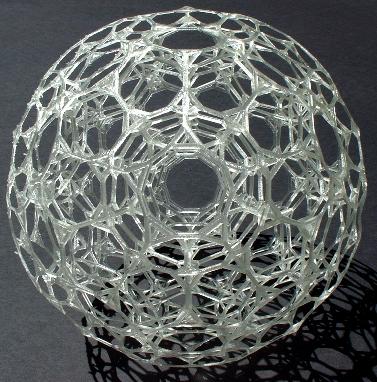
3D Printing (or rapid prototyping) allows you to print some very complex and beautiful geometric objects never seen before:


Head over to GeorgeHeart to see his amazing creations.

Maybe someday we'll be able to "print" anything we want - from clothes, to food, to fully working complex mechanical and electronic devices.

Care to bet against me? :)

Thursday, January 17, 2008

Is Free Internet coming to an End?

Just like in many other countries around the world, with severely limited internet connections, Time Warner now wants to take a step back, and start charging you by the "byte".

Say goodbye to unlimited data connections - if they do as they want, you'll be paying each megabyte going through your connection dearly.

According to them, they "need" to do this to stop a small percentage from internet users to use up to 50% of all bandwidth.
However, with HD online movie rentals and streaming becoming more likely each day, this will soon lead to heavy extra fees if you want to use the internet connection you're already paying for!
Don't they advertise high bandwidth speeds? Don't they advertise unlimited data plans? Isn't that what you'er paying?... Apparently they think that's not enough.

If you watch a couple HD programs per day and an HD movie every now and then, you can easily get over the proposed 500Gb monthly limit and incur in serious extra payments.

With all the traffic shaping, packet filetering - and who knows what else! - going on, things are not looking for net neutrality advocates and a free internet for all.

Update your Torrent clients

There's a security flaw affecting the following torrent programs:

- BitTorrent 6.0 (build 5535)
- uTorrent 1.7.5 (build 4602)
- uTorrent 1.8 (alpha 7834)

It doesn't allow remote code execution (which would be very serious,) but it allows a remote attacker to crash your torrent program.

Get the new uTorrent version:
uTorrent 1.7.6 (build 7859)
[Link]

3D GPS Navigation "Nav N Go"

If you think your current GPS navigator is too flat, what do you think about having a GPS system that shows you terrain, elevated roads, buildings and landmarks?

No, it's not too good to be true, just check the YouTube Video:


It sure feels like saying: Nav N Go is the way to go! :)

via [MobileMag]

Wednesday, January 16, 2008

Imaginary Movie Posters

This is what is happens when someone asks other people to use their favorite image editors (Photoshop? Gimp?) and work their magic on their favorite movie posters.

Maybe with the lack of momentum Hollywood is facing due to the WGA strike, they can seriously consider doing some of these alternate movies by using existing footage and some digital effects.


See the rest of them at Worth1000.

There's a slight overuse of movies like Alien and Terminator, but considering the target audience, that's to be expected, right? :)

Tuesday, January 15, 2008

Apple MacBook Air

And there it is, Apple's new toy. Get ready to see heads turn, endless staring sessions, and lot's of broken hearts: Apple's newest MacBook Air.

It's impossible not to look at it without wanting to forget - just for a moment - that our bank accounts don't hang in a delicate balance. This is the new "I want one of those!" flagship.

Technically, nothing truly revolutionary - just that it's the thinnest laptop ever and that it comes with a supersized multitouch capable trackpad.

If on the design department Apple continues to reign supreme, there are already a few issues that have raised some attentions: it has an internal battery that can't be replaced by end-users (unless you like modding and adventures.)
However, this is just like what happens with iPods and iPhones alike - assuming Apple is using high quality batteries (and there's no reason to assume they don't,) you shouldn't need to worry about it for many long years.

The other issue... well... have you seen the 64GB SSD option? It sounds really nice, doesn't it? Considering the extra performance, it would be a match made in heaven... until you learn of the price: an extra $1,300! Ouch!

Well, that's not enough to make me change my mind. I want one, please. And with all the extras! :)

Super Hi-Vision for 2015?

High Definition Wars?... Bahhh
Blu ray VS HD DVD?... pfffff
4k Digital Cinema?... ahahaha

Say hi to Japan, the land where everything is obsolete before it even reaches the western world.
And now thery're getting ready to boldly go where no HD set has ever gone before: Super-Hi-Vision TV by 2015.

And what's this Super Hi Vision thingy, you may ask:
Nothing less than a picture resolution of 7680 x 4320 (also known as Ultra High-Definition.) That's exactly right: 33 Megapixels per frame - and you thought your 12Mp digicam was high quality.

Obviously, sound specs will have to match the ulta high definition of its image, and it touts a 22.2 channels sound system. I just wonder who in his/her right mind will be able to convince their partners to allow them to place 22 speakers all around the living room.

Just have a look at the comparison sheet:


Quite a big leap from HDTV standars, isnt it?

It is too much? Is it feasible?... Who knows?

A few years ago a friend of mine said I was crazy for playing games at 1024x768 resolution, saying that 800x600 was more than enough.
Today gamers are playing at 2560x1600 resolutions and constantly craving for more.

So, I won't say Super Hi-Vision is over the top, but considering 4k digital cinema systems are on the limit of eye acuity when projected on a cinema screens, what size will a SHV screen have to be for us to see its detailed pixel perfect clarity?

For now, there a lot to be solved: cameras than can capture live feeds at 33Mpixels, and equipment to handle the uncompressed 24Gbps stream of data flowing around.

Google Maps gets Official Weather Channel

It was just a matter of time till Google Maps showed you the weather out there.

Now, when you go to your My Maps section on Google Maps, you can now select a new Weather Channel layer made by The Weather Channel.

There were probably thousands of similar weather layers out there, but this is the first time that one is made with official Google support.

Can you envision planning a trip and being able to stay way from bad weather?

Now we just need weather report that are actually accurate... :)

via [PC World]

Monday, January 14, 2008

Splashtop Instant On on Eee PC

This is the perfect example on how there's still much that can (and should) be done in the software department to truly make the most out of current hardware: an Eee PC (not a very powerful machine) instantly booting Splashtop.


[YouTube video]

Splashtop is a "minimal" desktop OS version, allowing you to access the internet as well as do some other simple tasks. It comes as standard on some high end Asus Motherboards, but the video shows that it could easily be used from an external USB flashg drive.

In a time where web apps become widely used, a device that can instantly boot to a web browser seem to be quite handy, don't you think?

So, what's the excuse to waste a couple of minutes waiting for a regular OS to boot up, in order for you to check and reply to your email, or read some news feeds?

via [UltraMobileGeek]

Saturday, January 12, 2008

Entertainer - Linux Media Center

If you're considering assembling your own HTPC (Home Theater PC) but don't want to use Windows Media Center Editions, you'll love Entertainer. This project is a complete multimedia solution for Gnome and XFce environments written in Python. For its multimedia functions it uses the well known GStreamer and its interface is coded using Clutter, allowing smooth UI animations via OpenGL. Entertainer also uses some other interesting projects like SQLite, pyIMDBb and iNotify .

If you're interested in supporting the project than head to Entertainer and drop them an email.

After recently having discovered LinuxMCE, the Media Center solutions for linux are looking better than ever.

Here's a short YouTube video showing how nice its interface looks and behaves:

Thursday, January 10, 2008

Wireless Self-Powered Switches

Wireless switches are nothing new; they've been used for ages. Being able to place a switch anywhere you want without drilling holes in your walls and routing cables is quite appealing. More so, if you don't like the switch where it currently is, you can just detach it and place it somewhere else - so it's not covered by your new furniture, for instance.

However, until recently, they all had one major flaw: batteries.

I don't know about you, but I really hate batteries. It's more the certain that the battery will run dry in the worst possible moment - probably just as you were about to throw a party, leaving you in dark.

So, can't we fix this issue once and for all?

Yes you can: with wireless self-powered switches!

There's no "but" attached, it really works as advertised, using an ingenious system.
EnOcean is a company specialized in self-powered devices (the kind all devices should be) and holds lots of patents in the field.

When it comes to wireless switches, they were able to generate enough energy to transmit the status change by the "flicking" of the switch movement alone! Really amazing, isn't it?

Don't expect to use WiFi, ZigBee or Bluetooth though. The minute amount of energy available forced to use a proprietary protocol which allows them to transmit the data three times (for reliability) and possibly more if there's still enough energy left to try further retransmissions.

It's not quite wireless electricity, but it's definitely a step in the right direction.

Wednesday, January 9, 2008

Eee PC with larger LCDs [Pics]

And here it is: the first photos of the Eee PCs with larger LCDs.


We can see the original Eee PC on the left, with its 7" LCD screen. The 8" model is on the right, using the exact same case.

There are no images of the 8.9" model - but it's theoretically possible to use the 8.9" LCD on the original Eee PC case.

Even stranger, the 8" model has the exact same resolution of the 7" screen (800x480) meaning...


Slightly bigger screen, no extra desktop real estate that is so desperately needed in a screen with only 480 pixels of vertical resolution.
I realize this suits Asus - it can use the same interface they developed for the original Eee without modification, and the extra cost will be negligible. I expect they'll soon phase out the 7" Eee PC and release this 8" version.


On the other hand, the 8.9" LCD appears to have higher resolution, but there are no details about it. As I previously reported, there are LCD manufacturers offering these LCDs with 1280x800 resolution - and that would be excellent. But how much would Asus ask for that enhancement? That's yet to be announced.

I still hope they'll be able to somehow fit a higher resolution 8.9" LCD in the original form factor, that will make the Eee PC appealing to a much larger audience.

via [Eeepcnews]

Tuesday, January 8, 2008

It's Official: Eee PC will get Bigger LCDs

It's official, from no choice at all, we'll soon have a lot more screen sizes to choose from. Asus has confirmed that there will be 3 LCD sizes for the Eee PC: 7" (current size) 8", and 8.9" - at last!
We'll have to wait and see if they'll keep its "tiny" size - hope so! - or if they'll ruin it by enlarging its case.


Let's hope they don't inflate the prices insanely; it was shown that the 8.9" LCD added just $15 to $20 to its manufacturing cost - Asus should keep that in mind.

Nice to hear about the WiMax option - though it will depend on you area (in here, there's no WiMax nor is it expected any time soon.)
Let's also hope that the worldwide availability at launch works better than it did with the Eee PC, which has yet to reach a lot of European countries.

via [Engadget]

VideoTrace: Rapid interactive scene modelling from video

Ever seen someone doing a trace on photoshop, VideoTrace is the 3D equivalent and it's done over video. Just check the amazing video after the break.
VideoTrace is a system for interactively generating realistic 3D models of objects from video—models that might be inserted into a video game, a simulation environment, or another video sequence.

The user interacts with VideoTrace by tracing the shape of the object to be modelled over one or more frames of the video. By interpreting the sketch drawn by the user in light of 3D information obtained from computer vision techniques, a small number of simple 2D interactions can be used to generate a realistic 3D model.

Each of the sketching operations in VideoTrace provides an intuitive and powerful means of modelling shape from video, and executes quickly enough to be used interactively. Immediate feedback allows the user to model rapidly those parts of the scene which are of interest and to the level of detail required.

The combination of automated and manual reconstruction allows VideoTrace to model parts of the scene not visible, and to succeed in cases where purely automated approaches would fail.

The Siggraph paper describing VideoTrace is available here (pdf 6MB), and an avi of the video below which outlines how it works is available here (avi), with a more compressed version here (avi).

[Videotrace]


Monday, January 7, 2008

Closing the Circle

I was surprised to read about this on Wired as I was thinking about it just a few weeks ago:

One of the first things I learned at Chemistry classes was that: nothing is created, nothing is destroyed, everything just transforms. (Thanks Lavoisier)

So, considering our dependency on fossil fuel, why shouldn't we be able to "transform" the resulting products of combustion back into the fuel we require?
(At least in theory that should be possible to do using "clean" power sources - although I won't argue regarding how much better it would be to use clean power sources right from the start.)

Chemical reaction still provide much higher "power" than any existing technology - just look at at the Space Shuttle, it burns chemical components, and even so it still requires solid rocket boosters for extra help. I can't imagine when a pure "electrical" space shuttle will be able to reach orbit - at least no until we get "anti-gravity" devices - or some other major breakthrough.


That how I start wondering - using a clean power source, we should be able to revert the resulting components back into its original form. Sure it would require a lot more energy - but if it came from renewable and "clean" sources, what would be the problem?

The Sunlight to Petrol, or S2P, project essentially reverses the combustion process, recovering the building blocks of hydrocarbons. They can then be used to synthesize liquid fuels like methanol or gasoline. Researchers said the technology already works and could help reduce greenhouse-gas emissions, although large-scale implementation could be a decade or more away.

"This is about closing the cycle," said Ellen Stechel, manager of Sandia's Fuels and Energy Transitions department. "Right now our fossil fuels are emitting CO2. This would help us manage and reduce our emissions and put us on the path to a carbon-neutral energy system."

The idea of recycling carbon dioxide is not new, but has generally been considered too difficult and expensive to be worth the effort. But with oil prices exceeding $100 per barrel and concerns about global warming mounting, researchers are increasingly motivated to investigate carbon recycling. Los Alamos Renewable Energy, for example, has developed a method of using CO2 to generate electricity and fuel.

(full article here)

Friday, January 4, 2008

CFast - Compact Flash gets Sata Interface

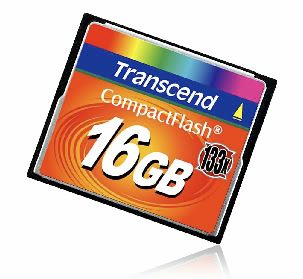
It looks like Compact Flash cards are not willing to become obsolete. The Compact Flash organization is upgrading its "old" CF to provide an easy upgrading path for newer and faster technologies..

For that, expect to start seeing the new CFAST CF cards, which let go of the traditional PATA parallel interface (which maxed out at 1133MB/s) and will start using SATA, with speeds up to 3Gb/s.

Obviously, don't expect to see flash cards using this speed in the near future, but considering a lot of other devices use CF interfaces: input/output, VGA, Ethernet, Modems, Phones, Bluetooth, TV, GPS, etc. it's always nice to know you won't be limited by the old PATA transfer rates.
COMPACTFLASH ASSOCIATION DISPLAYING NEW CFAST™ CONNECTOR & PACKAGE AT CES 2008

CFast Utilizes SATA Interface for 3Gb/sec Interface Data Rate.

Palo Alto, California - January 4, 2008 - The CompactFlash Association (CFA) announces that CFast connectors and package will be displayed at CES 2008 in the CFA booth South 3 30166.

The CFast WG was formed in July 2007 to develop the CFast specification for a CompactFlash card with a SATA (Serial ATA) interface. CFA members interested in the SATA interface should apply for inclusion in the CFA's SATA working group.
(...)

[Official Site]

Thursday, January 3, 2008

PointUI - Improve your Windows Mobile

PointUI is the perfect example of how you can easily use existing hardware in much better and easier ways.

You may have a lot of good things to say about windows mobile - but no one can deny that its interface is not very useful. It's basically a mini-version of the same interface you have on a desktop PC, with the same menus and drop-downs options that are not suitable for mobile operation (not to mention requiring a stylus or multiple cursor key pressing.)

PointUI is a free program that shows how it could all be a lot simpler, and that it's time to invest in innovative and useful interfaces - just like Apple has been doing with its iPhone and iPod Touch.

Just watch this Youtube video:


You can download PointUI for free.

Wednesday, January 2, 2008

Eee PC gets WiMAX and Bigger LCD with 1280x768?

The rumors about the Asus Eee PC keep going strong, but this time some info comes from Asus itself.
Join ASUS, Intel and Sprint to learn about the state of WiMAX technology, preview next-generation mobile solutions (including the next generation EeePC) and immerse yourself in tomorrow’s wireless protocol.
So, a WiMAX enabled Eee PC is almost certain - and I'm sure thousands of users will gladly take it.

As for the bigger LCD - since it's the thing I've been "complaining" about since I first reviewed it - according to China Times:
Asustek also Eee PC, the new specifications will be listed in addition to the screen some of the current seven inches, will join the 8.9-inch screen.
(...)
understood that Eee PC 7-inch panel prices about 40 US dollars, 8.9-inch panel prices about 55 to 60 US dollars to Eee PC
As you can read for yourself, 15 or 20 USD... that's all it takes to have a bigger 8.9" LCD screen (hopefully 1280x600 or 1280x720) - I just can't understand why they didn't select it right from the start..

We'll have to wait until Jan 7th to see if the WiMAX Eee PC will have this new 8.9" LCD - I hope it does; but considering the success they've been having with the current model, I wouldn't be surprised if they delayed this new model for as long as possible.

Edit: I've been digging around to find which 8.9" LCD they could use, and I found these 8.9" 1280x768. Wouldn't that be just perfect? :)

Tuesday, January 1, 2008

Demoscene on a 1981 IBM PC

Nothing better to start the year than point out how current hardware is so badly used. With all the current multi-core CPUs, with Gigahertzs and Gigabytes, see what you could on an original 1981 IBM PC with an amazing 640Kb Ram, working at a blazingly fast 4.77Mhz, and obviously: CGA graphics.


The demo is called 8088Corruption and if you're curious about how this was possible, you can also check this video 8088Corruption Explained.

Amazon Store